Satellite imagery has revolutionized how we monitor Earth’s atmosphere, enabling unprecedented accuracy in cloud cover classification through advanced technological frameworks and machine learning algorithms.

🌍 The Revolution in Atmospheric Monitoring
The ability to accurately classify cloud cover from space represents one of the most significant achievements in modern meteorology and environmental science. Satellites orbiting our planet capture millions of images daily, providing real-time data that helps scientists, meteorologists, and decision-makers understand weather patterns, climate change, and atmospheric conditions with remarkable precision.
Cloud cover classification isn’t merely an academic exercise—it has profound implications for agriculture, aviation, renewable energy, disaster management, and climate research. Understanding the type, density, and movement of clouds allows us to predict weather events, optimize solar panel efficiency, plan flight routes, and prepare for severe weather conditions.
The evolution from ground-based observation to satellite-based monitoring has compressed centuries of meteorological advancement into just a few decades. Where once meteorologists relied on visual observations and limited ground stations, today’s scientists harness sophisticated sensors aboard satellites that capture data across multiple spectral bands, revealing information invisible to the human eye.
📡 Understanding Satellite Imagery Technology
Modern satellite systems employ various sensor types to capture atmospheric data. Passive sensors detect natural radiation reflected or emitted by clouds and the Earth’s surface, while active sensors like radar emit their own signals and measure the return. This multi-faceted approach provides comprehensive cloud characterization capabilities.
Geostationary satellites maintain a fixed position relative to Earth’s surface, offering continuous monitoring of specific regions. These platforms, positioned approximately 36,000 kilometers above the equator, provide images every 5 to 15 minutes, making them ideal for tracking rapidly evolving weather systems and cloud formations.
Polar-orbiting satellites travel closer to Earth at altitudes around 800 kilometers, circling the planet from pole to pole. Though each point on Earth is observed less frequently, these satellites provide higher resolution imagery and complete global coverage, essential for comprehensive climate studies and detailed cloud analysis.
Spectral Bands and Cloud Detection
The key to effective cloud classification lies in multispectral imaging. Different cloud types exhibit unique spectral signatures across visible, infrared, and microwave wavelengths. Water droplets, ice crystals, and atmospheric gases interact differently with various wavelengths, creating distinct patterns that sophisticated algorithms can identify and classify.
Visible light imagery reveals cloud structure and texture during daylight hours, showing bright white clouds against darker land or ocean surfaces. Infrared channels detect temperature differences, allowing cloud height estimation—higher clouds appear colder and thus brighter in infrared imagery. Water vapor channels reveal moisture distribution in the atmosphere, crucial for understanding cloud formation processes.
🤖 Machine Learning: The Game Changer
Artificial intelligence and machine learning have transformed cloud cover classification from a labor-intensive manual process into an automated, scalable operation. Neural networks trained on millions of labeled satellite images can now identify cloud types with accuracy often exceeding human experts, processing vast datasets in seconds rather than months.
Convolutional neural networks (CNNs) have proven particularly effective for image-based cloud classification. These deep learning architectures automatically learn hierarchical features from raw satellite data, identifying patterns ranging from simple edges and textures to complex cloud formations and weather systems.
The training process involves exposing algorithms to extensive datasets where clouds have been manually classified by meteorologists. Through iterative learning, the network adjusts its internal parameters to minimize classification errors, eventually achieving remarkable accuracy across diverse cloud types and atmospheric conditions.
Classification Categories and Accuracy
Standard cloud classification systems typically recognize several primary categories: cumulus, stratus, cirrus, nimbus, and various hybrid forms. Each category has distinct meteorological implications. Cumulus clouds indicate convective activity, cirrus clouds suggest upper-atmosphere conditions, while nimbus clouds typically bring precipitation.
Modern machine learning models achieve classification accuracies exceeding 90% for major cloud types under optimal conditions. However, accuracy varies based on factors including image resolution, atmospheric interference, surface characteristics, and the complexity of mixed cloud systems where multiple types coexist.
⚡ Real-World Applications Transforming Industries
The practical applications of precise cloud cover classification extend far beyond weather forecasting. The renewable energy sector relies heavily on accurate cloud predictions to forecast solar power generation. Solar farms use satellite-derived cloud forecasts to predict energy output hours or days in advance, enabling better grid management and energy storage optimization.
Agriculture benefits tremendously from cloud classification systems. Farmers use cloud cover data to plan irrigation schedules, predict frost events, determine optimal planting and harvesting windows, and assess crop water stress. Precision agriculture platforms integrate satellite cloud data with ground sensors to provide actionable insights that increase yields while reducing resource consumption.
Aviation safety depends critically on accurate cloud information. Pilots navigate using real-time cloud cover data to avoid turbulence, icing conditions, and severe convective systems. Airlines optimize flight routes based on cloud forecasts, reducing fuel consumption and improving passenger comfort while maintaining safety standards.
Disaster Preparedness and Response
Severe weather events often announce themselves through characteristic cloud formations. Hurricane forecasters track tropical storm development by monitoring organized cloud systems over warm ocean waters. Tornado prediction relies on identifying supercell thunderstorms with distinctive cloud structures visible in satellite imagery.
During active disasters, satellite cloud classification helps coordinate emergency response efforts. Fire managers use cloud cover data to predict wildfire behavior, as cloud cover affects temperature, humidity, and wind patterns that drive fire spread. Flood forecasters integrate cloud data with rainfall estimates to predict river levels and issue timely warnings.
🔬 Technical Challenges and Innovations
Despite remarkable progress, cloud classification from satellite imagery faces persistent challenges. Cloud shadows can be misclassified as clouds themselves, particularly over heterogeneous surfaces. Snow and ice cover exhibit spectral signatures similar to certain cloud types, requiring sophisticated algorithms to distinguish between them.
Thin cirrus clouds pose detection difficulties as they’re semi-transparent, allowing underlying surface features to remain visible. These high-altitude ice clouds significantly affect Earth’s radiation balance but can escape detection by traditional methods. Advanced multi-spectral techniques and temporal analysis help identify these subtle cloud formations.
Edge cases where multiple cloud layers overlap at different altitudes present classification complications. A thick stratus deck beneath scattered cumulus clouds creates complex signatures that challenge both human interpreters and automated systems. Three-dimensional cloud reconstruction techniques using stereo satellite imagery help resolve these ambiguities.
Emerging Technologies on the Horizon
Next-generation satellites carry hyperspectral sensors that capture data across hundreds of narrow spectral bands rather than the dozen or so bands of current systems. This spectral richness enables unprecedented discrimination between cloud types and improved detection of subtle atmospheric phenomena.
Small satellite constellations represent another frontier in cloud monitoring. Companies and space agencies are deploying dozens or hundreds of small, low-cost satellites that provide more frequent revisit times and diverse observation angles. This constellation approach dramatically increases temporal resolution, crucial for tracking rapidly evolving cloud systems.
Quantum computing, though still experimental, promises to revolutionize the processing of massive satellite datasets. Cloud classification algorithms that currently require hours on conventional computers might execute in minutes on quantum systems, enabling real-time global cloud analysis at unprecedented scales.
🌐 Global Collaboration and Data Accessibility
International cooperation has been fundamental to advancing satellite-based cloud classification. Organizations like NASA, ESA, NOAA, and meteorological agencies worldwide share satellite data and collaborate on algorithm development. This open approach accelerates innovation and ensures that cloud classification capabilities benefit scientists and communities globally.
Public access to satellite imagery has democratized atmospheric research. Platforms like Google Earth Engine provide cloud-based computing infrastructure where researchers, students, and developers can access petabytes of satellite data and implement custom cloud classification algorithms without requiring expensive local computing resources.
Citizen science initiatives leverage public participation in cloud classification efforts. Projects like NASA’s GLOBE Observer allow anyone with a smartphone to submit ground-based cloud observations that help validate satellite classifications. This crowdsourced data improves algorithm accuracy and engages the public in atmospheric science.
📊 Measuring Success: Accuracy Metrics and Validation
Evaluating cloud classification accuracy requires robust validation methodologies. Ground-based observations from trained meteorologists provide reference data against which satellite classifications are compared. Automated ground-based instruments like ceilometers and sky cameras offer objective measurements of cloud base height and coverage.
Confusion matrices display classification performance across all cloud categories, revealing which types are most accurately identified and which are frequently confused. Cumulus and stratocumulus clouds often present classification challenges due to their variable structure and similar appearances under certain conditions.
Temporal consistency represents another important accuracy dimension. Classification algorithms should produce stable results when analyzing consecutive images of slowly evolving cloud systems. Erratic classifications that change dramatically between images suggest algorithmic instability rather than genuine atmospheric changes.
Continuous Improvement Through Feedback Loops
Machine learning systems improve continuously as new training data becomes available. Misclassified cases identified through validation studies are added to training datasets, allowing algorithms to learn from mistakes. This iterative refinement process gradually extends classification capabilities to previously challenging scenarios.
Operational meteorological centers provide valuable feedback by using satellite-derived cloud classifications in weather forecasting systems. When forecasts diverge significantly from observations, the underlying cloud classifications are reviewed, and discrepancies inform algorithm improvements.
🚀 The Future Landscape of Cloud Classification
The trajectory of satellite-based cloud classification points toward increasingly automated, accurate, and accessible systems. Integration with numerical weather prediction models will tighten the connection between observed cloud patterns and forecast atmospheric states, improving prediction skill across all timescales.
Artificial intelligence will evolve beyond classification to prediction. Next-generation systems won’t merely identify current cloud types but will forecast cloud evolution minutes to hours ahead, providing early warnings of developing severe weather and enabling proactive decision-making across weather-sensitive sectors.
Edge computing and on-board satellite processing will reduce latency between image capture and classification results. Rather than downloading raw imagery to ground stations for processing, future satellites will perform initial cloud classification autonomously, transmitting only the processed results and thereby reducing bandwidth requirements and accelerating information delivery.
Personalized Cloud Information Services
Cloud classification technology will increasingly support personalized applications tailored to individual needs. Solar panel owners might receive notifications when approaching cloud systems will temporarily reduce power generation. Photographers could get alerts when dramatic cloud formations develop near their location. Outdoor event planners would access hyperlocal cloud forecasts specific to their venue and timeframe.
Mobile applications integrating real-time satellite cloud data are already emerging, bringing professional-grade atmospheric information to consumers. These tools leverage cloud classification algorithms to provide intuitive visualizations and actionable recommendations, making sophisticated meteorological data accessible to non-experts.
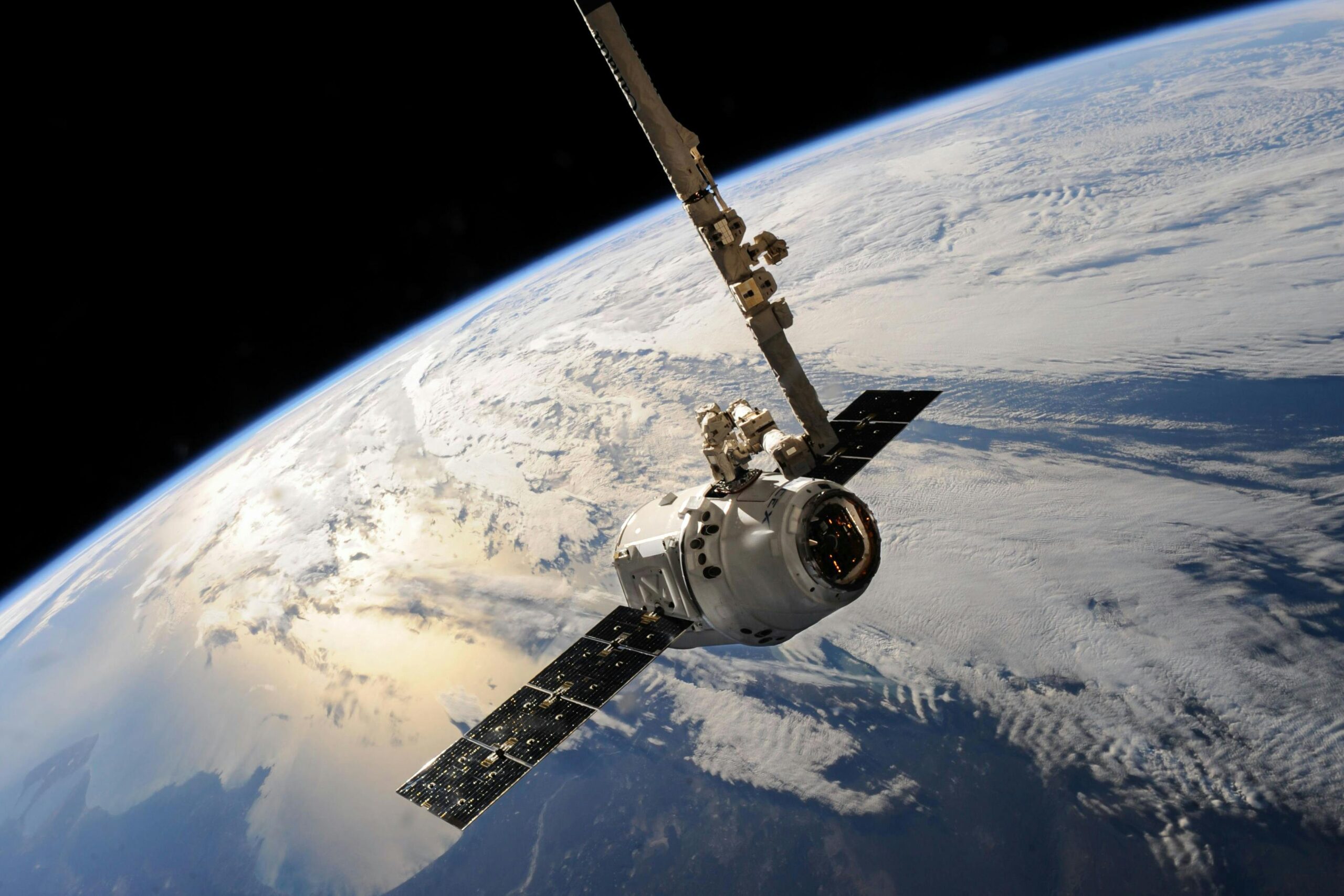
💡 Bridging Science and Society
The ultimate value of satellite-based cloud classification lies in its translation from technical achievement to societal benefit. As climate change intensifies weather variability and extreme events become more frequent, accurate cloud information grows increasingly critical for adaptation and resilience.
Education initiatives incorporating satellite cloud classification introduce students to remote sensing, data science, and Earth system science. Hands-on projects analyzing real satellite imagery inspire the next generation of atmospheric scientists while building public understanding of how modern weather forecasting works.
The intersection of cloud classification technology with other Earth observation capabilities creates powerful synergies. Combining cloud data with measurements of aerosols, greenhouse gases, and surface properties enables comprehensive atmospheric analysis that addresses pressing questions about climate change, air quality, and environmental health.
As we continue unlocking the sky through advanced satellite imagery and sophisticated classification algorithms, we gain not just better weather forecasts but deeper insights into the complex atmospheric system that sustains life on Earth. This knowledge empowers informed decisions that protect lives, optimize resources, and build a more resilient future in harmony with our planet’s atmospheric rhythms.
The journey from ground-based cloud observation to AI-powered satellite classification represents human ingenuity at its finest—transforming how we see, understand, and interact with the ever-changing canvas above us. The sky is no longer a mystery but an open book, readable through the powerful lens of modern technology and scientific collaboration.